
A local SEO strategy is a plan for showing up when nearby customers search for what you sell. It rests on five jobs: a complete Google Business Profile, consistent business data, a steady flow of real reviews, a website that names the places you serve, and structured data that explains it all to Google. This guide puts them in the order we would do them, with the traps to avoid.
How Google decides who ranks locally
When someone searches “plumber near me” or “Italian restaurant,” Google weighs three things, according to Google’s own guidance on local ranking:
- Relevance: how well your profile matches the search.
- Distance: how far you are from the searcher, or from the location named in the query.
- Prominence: how well known you are, which includes review count, review quality and information found around the web.
You cannot change distance. You can change the other two. That is the whole strategy in one sentence: be the most complete, consistent and trusted match for the search.
The payoff is intent. The U.S. Small Business Administration describes a local business as one that gets most of its customers from within a 75-mile radius, so your job is to reach people close enough to buy. Local searchers are often ready to call, visit or book.
Step 1: Build a complete Google Business Profile
Your profile is the first thing many customers see. Treat it as a living asset, not a one-time form.
- Claim and verify it. Only one profile per business. Google’s representation guidelines ask that you use the name your business uses in the real world, and an accurate address or service area.
- Choose the fewest categories that describe your core business. Pick the primary category with care. It carries the most weight for relevance.
- Keep hours, phone and services current. Update for holidays and seasonal changes.
- Add real photos. Show your storefront, your team and finished work. For a good example of why images matter, see this look at Google Business Profile photos that convert.
- Answer every review, good or bad. The SBA recommends monitoring the sites where reviews appear and responding consistently.
- Write your exact business name, address and phone number in a single document.
- Search for your business on the major directories, maps and data aggregators.
- Correct every mismatch, not only the main profile. Old addresses and tracking numbers are the usual offenders.
- Check again every quarter.
- Ask right after the job is done, when satisfaction is highest.
- Send a direct link by text or email so leaving a review takes under a minute.
- Reply to every review within a few days.
- Keep the negative ones visible and answer them calmly. A mix of ratings looks more credible than a flawless 5.0.
- Give each main service its own page, and each location or service area its own page when you have real content for it.
- Put the city or neighborhood in titles, headings and body copy where it reads naturally.
- Show your address and phone number in text, not only in an image.
- Embed a map, add local photos and list local details such as neighborhoods served.
- Keep pages fast and readable on a phone, since most local searches happen there.
We cover the full routine in our Google Business Profile checklist. If you have no storefront, read our guide to service area SEO.
Step 2: Make your NAP data match everywhere
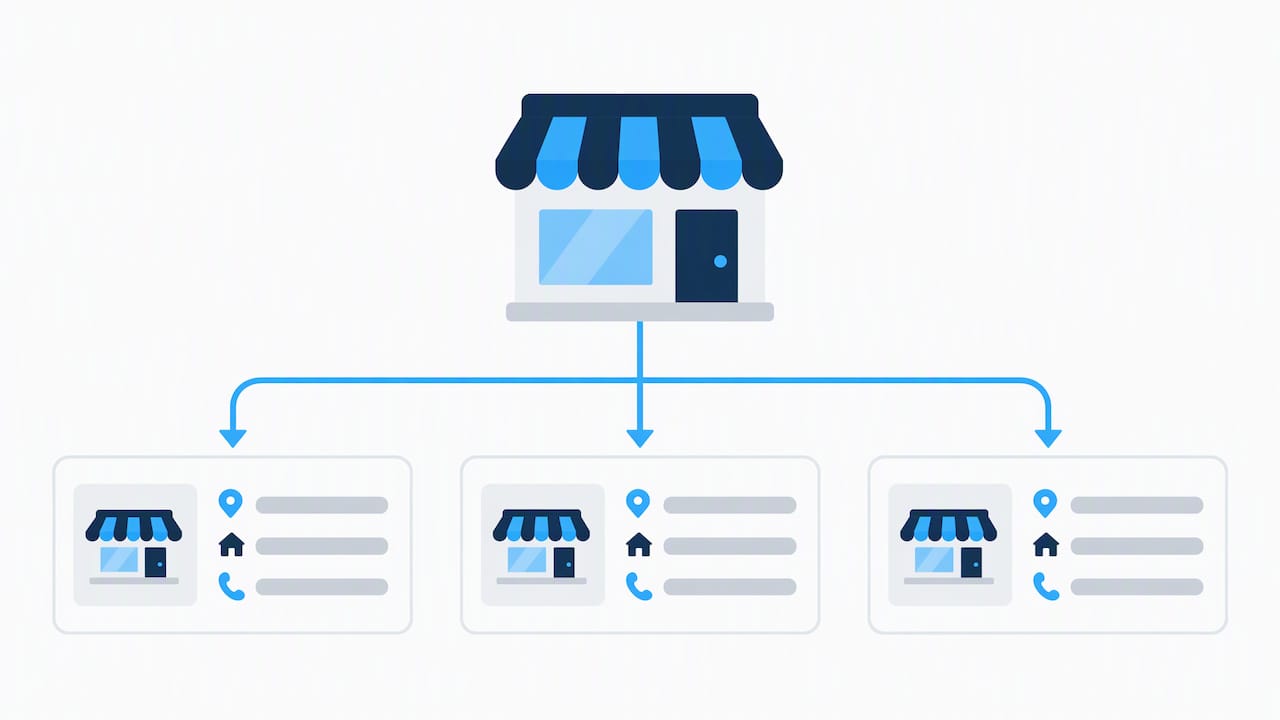
Many small businesses have three phone numbers and two spellings of the street across the web. That inconsistency weakens the confidence Google has in your listing.
Do this once, carefully:
This is slow work, and it is why many owners hand it off. Our Near-Me Search Boost is built to keep your listings accurate and your business visible in nearby searches.
Step 3: Earn reviews the safe way
Reviews feed prominence directly. According to the BrightLocal 2025 Local Consumer Review Survey, 81% of consumers use Google to find reviews, and 40% check at least two sites before choosing a local business. Recent reviews matter too: 20% of consumers say reviews as recent as two weeks old affect their decision.
A simple routine works better than a one-off campaign:
What you must not do
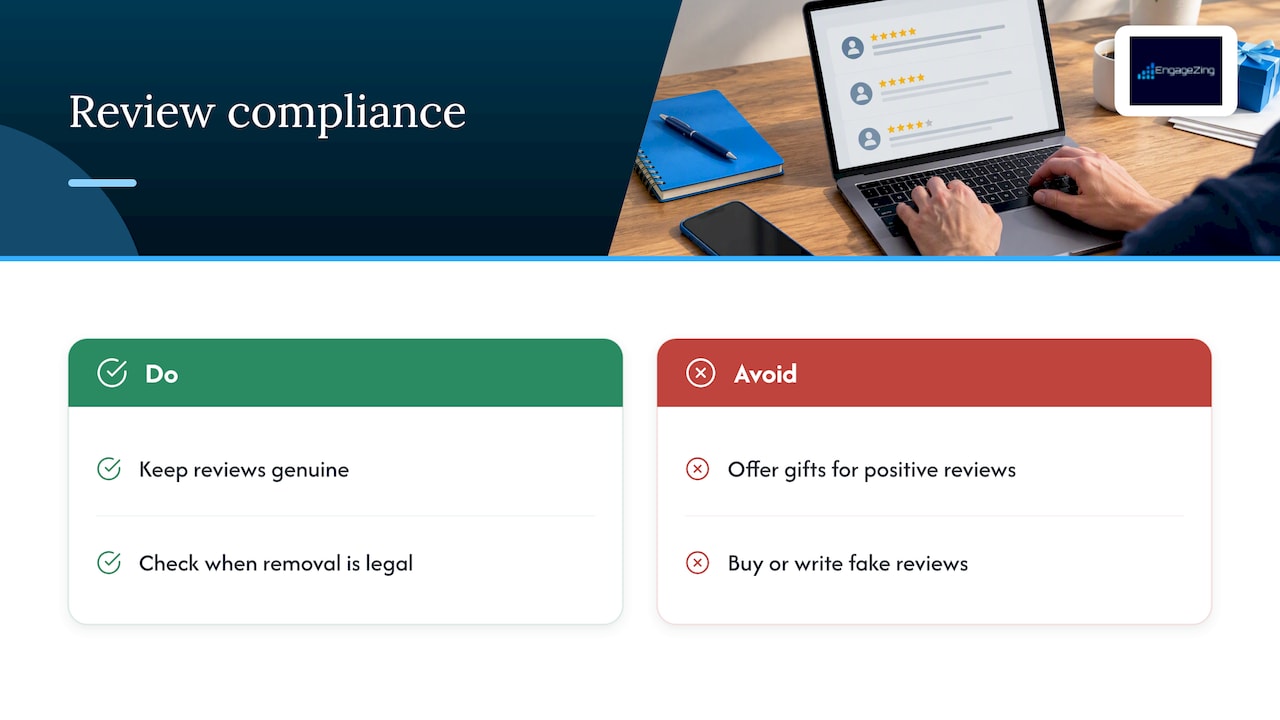
Never offer discounts or gifts for positive reviews, and never buy or write fake ones. Google says reviews must reflect a genuine experience. The FTC’s Consumer Review Rule took effect on October 21, 2024, and its Q&A for businesses explains that courts can impose civil penalties of up to $53,088 per violation. The agency has also sent warning letters to businesses about the rule.
If an unfair review is hurting you, see when you can legally ask to remove a Google review. To automate compliant requests, look at our Review Generation & Reputation service.
Step 4: Make your website say where you work
Your profile gets you into the map results. Your website backs it up.
Trade-specific pages help. For a worked example of the research and page planning, a locksmith’s step-by-step local SEO competitor research guide shows how a service business studies the businesses ranking above it. We also publish checklists for plumbers and dentists. If your website itself is the bottleneck, see our Winning Websites.
Step 5: Add structured data
Google reads structured data as explicit clues about what a page means. For a local business, LocalBusiness schema in JSON-LD can state your business type, address, hours and service area. Most owners rely only on their profile and skip this step, so it is an easy way to give Google more context. Ask your web developer to add it and test it before publishing.
A 30/60/90 day order of work
| Days | Focus | Output |
|—|—|—|
| 1 to 30 | Profile and NAP | Verified, complete profile; clean listings |
| 31 to 60 | Reviews and website | Review routine running; service and location pages live |
| 61 to 90 | Schema and content | Structured data added; one local post or page per month |
For more tactics at each stage, read our 30/60/90 local marketing strategies. Running more than one location? Our guide to multi-location SEO covers data and review management at scale.
Our perspective
Most local businesses we talk to do not lack effort. They lack a map. They have a profile that is half finished, a handful of reviews from two years ago, and a website that never says which town it serves. Each gap is small, but together they send customers to the competitor down the street.
That is why we start with a look at where you stand before asking you to spend anything. A clear audit shows where leads leak and what to fix first, so you can pick the work that moves the needle. We pair it with a local account manager who knows your market, because what works in a small town differs from what works in a big metro. And we favor results-based work over vague retainers, so you can see what you are paying for.
Frequently Asked Questions
What is a local SEO strategy?
It is a plan to improve your visibility in local results on Google Maps and Search. It covers your Business Profile, listings, reviews, website content and technical signals. The goal is to be the most relevant and trusted option for nearby searchers.
Is local SEO effective for small businesses?
Yes, because it reaches people already searching for what you sell, close to where you operate. Results take time, usually weeks to months, and depend on your competition and how complete your presence is today. No one can guarantee a specific ranking.
Can I pay Google to rank higher in local results?
No. Google states that there is no way to pay for a better local ranking. Paid ads are separate from the organic map results.
How many reviews do I need?
There is no magic number. Aim for a steady stream of recent, genuine reviews, and compare yourself with the top three businesses in your area. Ask every customer, and never offer rewards for positive feedback.
Ready to see what is holding your local rankings back? Request your roadmap analysis.
Share This Article
Found this useful? Send it to another owner who is still the same questions keep coming up.
Share on Facebook · Share on X · Share on LinkedIn · Share on Pinterest
Want More Information? Let’s Talk.
If you would rather not take this on yourself, we handle it for you. Our Near-Me Search Boost service takes care of the setup and the ongoing work, then reports back so you can see exactly what changed. You keep running your business; we keep this moving.
Call us at 631-825-9464 or reach out here. No pressure, no obligation, and you can ask us anything — including whether this is even worth doing for a business your size.
Looking ahead, request your roadmap analysis and we will map out a 12-month plan to close the conversion leaky bucket so more of the customers you already reach turn into booked work.
Written by Joe Leineke · Content on this blog is generated with AI assistance and independently reviewed and fact-checked by human marketing professionals for accuracy and quality.