Claim and fully optimize your Google Business Profile, build a system to collect reviews every week, and pick one paid or organic channel to test. Those three moves deliver the fastest local uplift: completed profiles get 7x more clicks, review responders earn more revenue, and a focused channel beats five half-run ones. Start with the checklist below.
TL;DR:
Completing and optimizing your Google Business Profile by adding photos, accurate hours, and relevant categories can significantly increase visibility and engagement. Consistently posting weekly updates and responding to reviews within 48 hours enhances local rankings and builds customer trust. Building a structured review collection system that asks for feedback immediately after service results in higher review volume and revenue growth. Fixing on-site issues such as NAP consistency, location pages, and mobile load speed is crucial for local search performance and AI-based answer accuracy. Focusing your marketing efforts on foundational improvements before investing in paid ads yields better long-term results and a stronger local presence.
Your 30/60/90-Day Local Marketing Strategy Checklist
Local marketing strategies fail most often because owners try to do everything at once and finish nothing. A staged rollout fixes that. Here’s the priority order, built around what actually moves clicks and calls first.
Days 1 to 30 (foundation):
- Claim, verify, and completely fill out your Google Business Profile (GBP): hours, categories, services, attributes, and a full description. Owner: you or whoever manages your online presence. Time: 2 to 3 hours.
- Upload at least 10 recent photos of your location, team, and product or service. Time: 1 hour.
- Set up a review request system: text or email every customer within 24 hours of service. Time: 2 hours to build the template.
- Turn on GBP messaging so customers can text your business directly from search results.
- Post to GBP weekly with an offer, update, or photo. Sample prompt: “Highlight one service, one photo, one call to action, under 100 words.”
- Audit your NAP (name, address, phone) across your top 10 directory listings.
- Launch one paid channel test, either Local Service Ads or a small geo targeted social campaign.
- Review your KPIs (calls, direction requests, ranking movement) and double down on whichever channel produced the lowest cost per lead.
- Add a location or service page to your website if you serve more than one neighborhood.
- Build one local partnership or event tie-in to generate reviews and a backlink.
- Categories: one specific primary category, plus 2 to 3 relevant additional categories.
- Hours: including special hours for holidays, which prevents lost visits from customers who show up to a locked door.
- Services and products: listed individually, not bundled into a generic description.
- Photos: at least 10 to start, refreshed monthly, covering your storefront, team, and work in progress.
- Q&A section: seed it yourself with the 5 questions customers ask most.
- Business description: a full paragraph using natural language about what you do and who you serve.
- In-store: print a QR code linking straight to your review page, placed at the register.
- Post-service: send a text within 2 hours: “Thanks for choosing us today! Mind leaving a quick review? [link]”
- Follow-up email: for service businesses, send a second nudge 3 days later if no review has posted.
- Response templates: thank positive reviewers by name and mention a specific detail; for negative reviews, acknowledge the issue, apologize once, and move the conversation offline.
- The neighborhood or city name in the page title and first paragraph, written naturally.
- Local landmarks or neighborhood references that show real geographic relevance.
- Customer photos or reviews specific to that location, where available.
- A clear call to action, phone number, and embedded map.
- Three to five FAQs that address that specific area’s common questions.
- Shot list: one 15 second clip of your storefront or team, one 20 second clip showing a service in action, one customer testimonial if you have permission.
- Captions matter more than production quality; most viewers watch muted.
- Repurpose the same clip across GBP posts, Instagram Reels, and Facebook, cutting production time by two-thirds.
- Local Service Ads (LSAs) fit home service businesses (plumbers, electricians, cleaners) where customers want to call immediately; Google vets and badges you, and you pay per lead, not per click.
- Search ads with radius targeting work for retail or restaurants where customers search by intent plus location; set a 5 to 10-mile radius around your storefront.
- Geo-targeted social ads work well for visual businesses, salons, boutiques, or anything with strong before-and-after appeal.
- Sponsor one local event per quarter and request a website link and social tag in return.
- At events, set up a simple review request station: a tablet or QR code, plus a small giveaway for anyone who leaves feedback on the spot.
- Pitch your local newspaper or community blog on the event tie-in before it happens; local press loves a business supporting the neighborhood.
- Month 1: baseline everything. Note your current GBP actions, review count, and ranking positions before changing anything.
- Month 2: measure lift from GBP optimization and the review system; expect early movement in profile actions before ranking shifts.
- Month 3: evaluate your paid test’s cost per lead against your target, then decide whether to scale, pause, or swap channels.
- Keep your services list current and specific, not bundled into one line.
- Update your GBP description whenever your offerings change; stale listings get pulled less often.
- Add a structured FAQ section to your website answering the exact questions customers type into search.
- Test your visibility by asking an AI assistant a question a customer might ask about your service and area, then check whether your business shows up.
- 10 Local Marketing Strategies That Work – SBA
- What 1.8 million Google Business Profiles tell us about local SEO success | Search Engine Land
- Your Google Business Profile is now an AI feed | Forbes
Days 31 to 60 (momentum):
Days 61 to 90 (scale what works):
Sample review request script: “Thanks for stopping in today! If you have 30 seconds, a quick Google review helps other neighbors find us. Here’s the link: [your link].”
Pro Tip: Do not launch all ten tasks simultaneously. Finish the GBP profile and review system first. Everything after that compounds faster once those two are solid.
How Do You Optimize Google Business Profile for Local Search?
Your Google Business Profile is no longer a static listing. It’s an active feed that Google’s local pack, Maps, and even AI-generated answers pull from directly. Treat it like a homepage, not a business card.
Start with categories. A study of 1.8 million Google Business Profiles found listings with specific primary categories appeared in the top 10 results about 12.5% of the time, compared to just 9.2% for businesses using generic categories. If you run a bakery that specializes in wedding cakes, “Bakery” is fine as a primary category, but “Wedding Bakery” or “Custom Cake Shop” as an additional category signals exactly what you do to both searchers and Google’s ranking systems.
Every field matters, and most businesses leave half of them blank:
Photo volume and posting frequency aren’t cosmetic details. Aggregated 2026 GBP data shows weekly posts drive roughly 28% more clicks than dormant profiles, and photo-heavy listings see meaningfully higher call and direction request rates than sparse ones. A profile with 5 photos and no posts since last spring is invisible next to a competitor posting weekly.
This activity feeds more than human searchers now. Google’s AI systems increasingly pull GBP fields directly into AI Overviews, which means a thin description or an empty Q&A section is a missed chance to be the source AI cites when someone asks “best plumber near me” through a voice assistant or chat interface.
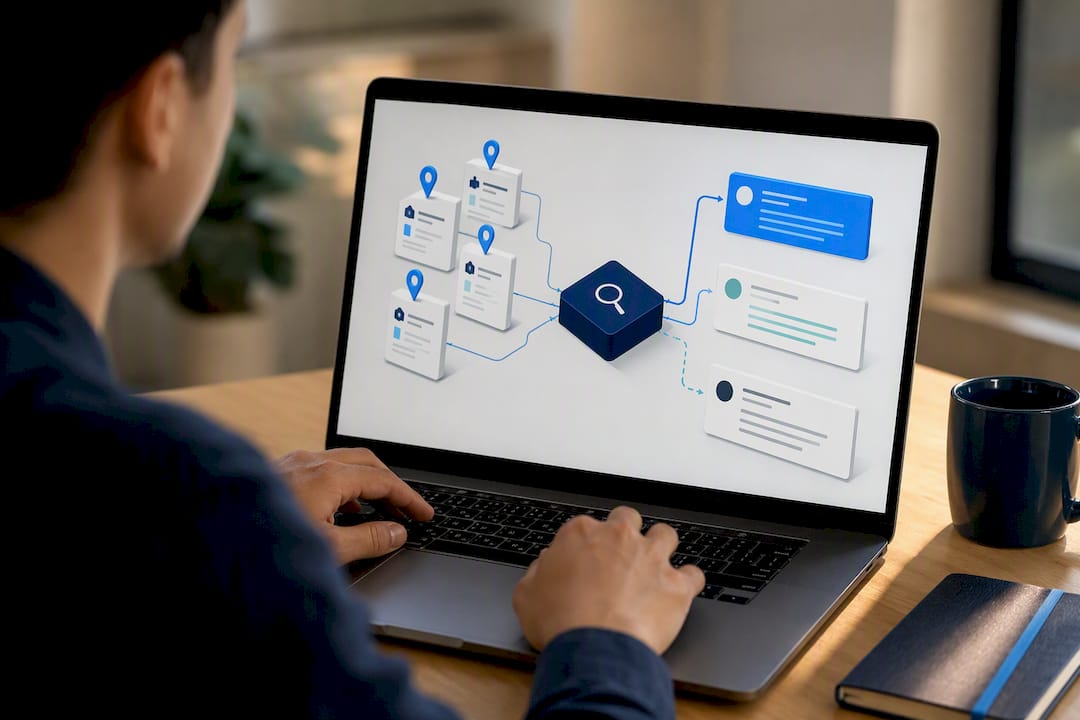
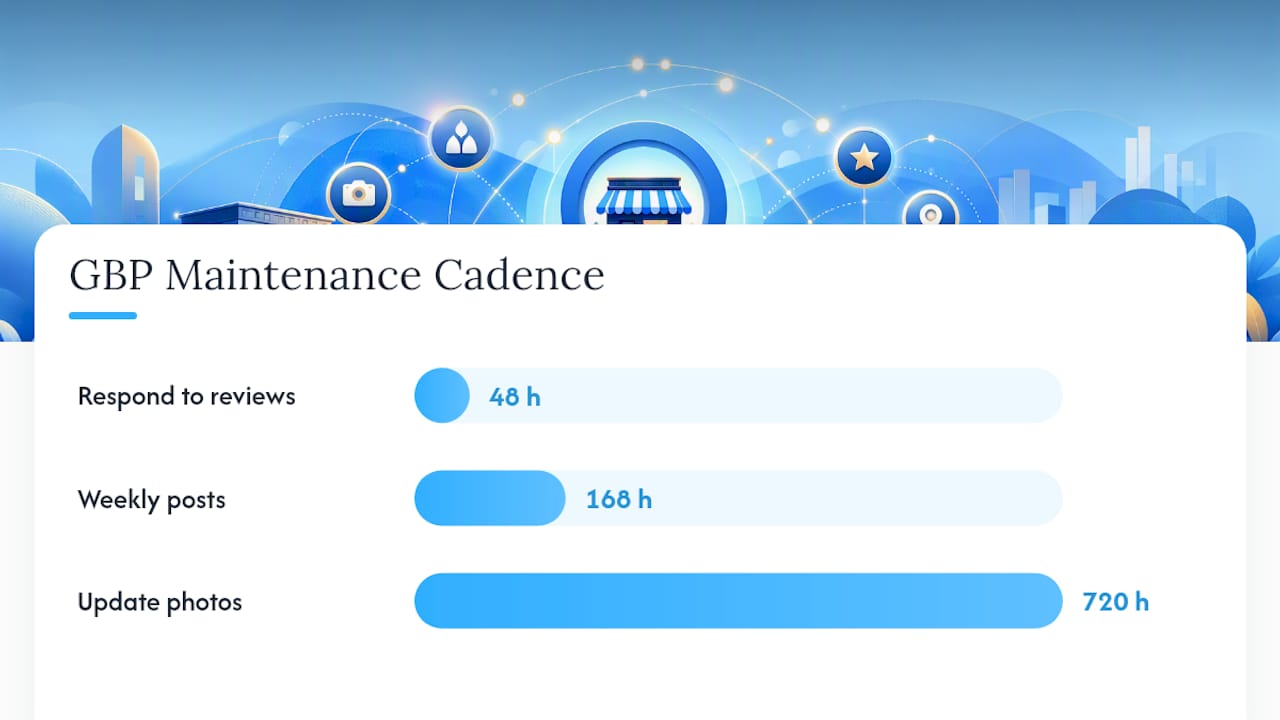
Set a maintenance cadence: update photos monthly, post weekly, and respond to every review and question within 48 hours. Businesses that treat GBP like a subscription service update it more, and Google notices.
What’s the Best System for Collecting and Responding to Reviews?
Reviews aren’t a nice-to-have side effect of good service. They’re one of the strongest ranking and conversion signals a small business controls directly, and the businesses that win locally treat review collection as a weekly task, not an occasional afterthought.
Timing beats everything else. Ask at the moment of highest satisfaction: right after checkout, right after service completion, or on the receipt itself with a QR code. A text sent the same day converts far better than an email sent a week later, because the experience is still fresh.
Respond fast. Businesses that reply to at least 25% of their reviews earn an average of 35% more revenue than those that ignore feedback, and replies within 24 hours correlate with stronger overall ratings over time. Set a target of 15 to 20 new reviews per month if you’re a service business with regular repeat customers, and aim for a mix of star ratings that reads as authentic rather than suspiciously perfect.
Manual tracking works for a while, but most owners lose the thread after the first busy month. A review generation system that automates the ask and flags responses due can keep the cadence consistent without you remembering to do it every day.
Pro Tip: Never offer a discount in exchange for a review. It violates most review platform policies and can get reviews removed in bulk, which sets you back further than never asking at all.
How Do You Fix On-Site Local SEO Issues?
Your website still matters, even with GBP carrying more weight than it used to. The three biggest on-site problems for local businesses are inconsistent contact information, missing location pages, and slow mobile load times.
NAP consistency means your business Name, Address, and Phone number match exactly, character for character, everywhere they appear online. Audit your top 10 to 15 directory listings, including Yelp, Apple Maps, Bing Places, and industry-specific directories, and fix any mismatch. “Street” versus “St.” or a disconnected old phone number confuses both customers and Google’s local algorithms, which weigh proximity and consistency heavily.
If you serve more than one neighborhood or city, build a dedicated page for each, rather than relying on one generic “service area” list. Each location page should include:
Add LocalBusiness schema markup to your homepage and every location page. This structured data tells search engines your hours, address, price range, and service area in a format machines parse instantly, rather than guessing from unstructured text. Most website platforms support a schema plugin, or a developer can add the JSON-LD snippet directly to your site’s header.
Mobile speed is not optional. Local searches happen overwhelmingly on phones, often while someone is standing outside deciding whether to walk in. If your site takes more than 3 seconds to load on a phone connection, you’re losing visitors before they see your hours. Compress images, remove unused plugins, and test with Google’s PageSpeed Insights monthly. A website built for conversions and speed closes this gap without a full rebuild.
What Kind of Local Content and Social Posts Actually Work?
Generic social posts get scrolled past. Hyperlocal content, the kind that mentions a specific street, event, or neighborhood detail, earns attention because it signals you’re actually part of the community, not broadcasting from a corporate template.
Blog posts that pair a neighborhood name with a service query perform reliably: “Best HVAC Repair in [Neighborhood]” or “[Neighborhood] Homeowners: What to Know Before Hiring a Roofer.” Keep them under 800 words, answer the question in the first two sentences, and include a real photo from that area if you have one.
Short-form video is worth the effort even on a small budget:
Community platforms like Nextdoor and local Facebook groups reward genuine participation over promotion. Answer a neighbor’s question about a local service issue before you ever mention your business, and when you do post an offer, frame it as news for the group rather than an ad.
Email and text still work for retention. A monthly local promotion, a birthday discount, or a “we noticed it’s been six months” reminder keeps existing customers coming back, and a simple on-site messaging and newsletter tool can automate the follow-up without extra staff time.
How Should Small Businesses Start With Local Paid Ads?
Paid ads work best as a small, measured test, not a full budget commitment on day one. The channel you choose depends on what you’re selling and how customers search for it.
Start with a daily budget of $15 to $30 for search or social, or let LSAs run on a pay-per-lead model with a monthly cap you set yourself. Expect a wide range in your first month, often 5 to 20 leads depending on your industry and area, and calculate your target cost per lead by dividing spend by leads generated, then compare that to your average customer value. Split-test two landing pages, one focused on a phone call, one on a form, and track which source actually converts through call tracking or UTM parameters. A Local Service Ads setup removes much of the guesswork on the ad platform side.
How Do Community Partnerships and Events Build Local Visibility?
Sponsorships and local events do double duty: they generate real foot traffic and they create backlinks and user content that pure digital tactics can’t replicate on their own.
Approach a school, sports league, or community nonprofit with a specific offer, a cash sponsorship or product donation, rather than a vague “let us know how we can help.” Ask directly for a link on their sponsors page and a mention in their newsletter, which most organizations are happy to provide.
Photos and mentions from these events feed directly back into your GBP posts and social content, closing the loop between offline presence and online visibility.
How Do You Measure Local Marketing Results on a Small Budget?
Measurement doesn’t need a dashboard full of vanity metrics. Track four numbers: GBP actions (calls, direction requests, website clicks), phone calls, organic ranking movement for your top 10 keywords, and cost per lead on any paid channel.
The SBA recommends documenting your marketing plan formally, and it’s good advice: businesses with a written plan spend less on tactics that don’t work because they check results on a schedule instead of guessing.
For budget, a widely used baseline is 7 to 12% of revenue allocated to marketing overall. A business allocating a reasonable percentage of its annual revenue might set aside a moderate marketing budget, split across GBP management, review tools, website upkeep, and paid tests. Reallocate after month 3 toward whatever channel produced your lowest cost per lead, and cut whatever produced the highest.
How Do You Optimize for AI Overviews and Answer Engines?
Google’s AI increasingly builds its answers directly from your Google Business Profile fields, which means the businesses that get cited in AI-generated results are the ones feeding it clear, factual, sourceable content.
Write your GBP description and website FAQs as micro-answers: a direct sentence answering a specific question, followed by supporting detail. “We offer same-day emergency plumbing repairs in [area], with a 90-minute average response time” reads as a fact an AI system can lift and cite, while a vague marketing paragraph does not.
A business listings and voice search setup that keeps these fields current across platforms gives you a better shot at being the answer, not just a link below it.
What I’d Prioritize First on a Tight Budget
Most small business owners overcorrect in one of two directions: they either spend on ads before their GBP profile is even complete, or they spend months perfecting a website nobody local is searching for yet. Both waste money. The businesses that see real movement fix the free, foundational pieces first, profile completeness and reviews, then spend on paid channels only once those signals are strong enough to make the ad dollars work harder.
The local account management approach addresses this exact sequencing problem, because most owners don’t have the hours to run all of it themselves while also running the business.
Sources
Frequently Asked Questions
How much should a small business spend on local marketing each month?
It depends on your market and how competitive it is, but most local businesses get more from a smaller, sequenced budget than a large scattershot one. Start with the free work (profile, reviews, citations, on-site basics), then put paid budget behind the offers that already convert.
What should a local business do first with a limited budget?
Fix the Google Business Profile and start a review request routine. Those two cost time rather than money and they influence the map results more than anything else you can buy at this stage.
How long before local marketing shows results?
Profile and review changes can move map visibility within weeks. Content, citations and community work compound over three to six months. Paid ads can produce calls immediately, but only once the landing page and tracking are sound.
Does social media help local rankings?
Not directly. It builds the brand signals and repeat traffic that support rankings, and it keeps you visible to past customers who search your name later. Treat it as a multiplier on a foundation that already works.
Share This Article
Found this useful? Send it to another owner who is still spreading a small budget across everything at once.
Share on Facebook · Share on X · Share on LinkedIn · Share on Pinterest
Want More Information? Let’s Talk.
If you would rather not take this on yourself, we handle it for you. Our Near-Me Search Boost service takes care of the setup and the ongoing work, then reports back so you can see exactly what changed. You keep running your business; we keep this moving.
Call us at 631-825-9464 or reach out here. No pressure, no obligation, and you can ask us anything, including whether this is even worth doing for a business your size.
Looking ahead, request your free roadmap analysis and we will map out a 12-month plan so more of the customers you already reach turn into booked work.
Written by Joe Leineke · Content on this blog is generated with AI assistance and independently reviewed and fact-checked by human marketing professionals for accuracy and quality.