Most service businesses should prioritize local organic search with a complete Business Profile, one paid channel for fast demand, and lead capture automation on the website. Your single next step: audit your local listings today and add a chat or booking widget so no inquiry goes unanswered. Measure success with one KPI first: how fast you respond to a new lead.
TL;DR:
Focusing on local search and Google Business Profiles generates long-term visibility without ongoing costs, making it ideal for appointment-driven services. Paid channels like local service ads provide immediate leads from high-intent searches but require a dedicated landing page and prompt follow-up to convert efficiently. Building a referral or partnership network produces high-quality leads with less ongoing ad spend, though it takes time to develop consistent results. Implementing chatbots and booking widgets ensures continuous lead capture outside business hours, with measurable success driven by response speed. Conducting a quick, 30-day testing of one paid channel with a fixed budget prevents wasted spend and helps identify the most effective lead source for scaling.
Top lead channels for service businesses: strengths and best-fit use cases
Every channel does something different. The trick is matching the channel to your sales cycle, your ticket size, and how fast your team can respond.
Local organic search and your Google Business Profile deliver the best return for most appointment-driven businesses. A complete, accurate profile with regular review activity increases visibility in local search results, and it costs nothing but time. Google’s own guidance confirms that profile completeness and active review responses help local ranking, which makes this the first fix for almost any service business.
Paid search and local service ads work well when you need leads fast and can afford to pay for intent. Someone searching “plumber near me” at 9 PM is ready to book, and a well-targeted ad puts you in front of them immediately. Industry benchmark data shows paid channels often carry a larger share of marketing-sourced pipeline when a business depends on marketing rather than word of mouth for its lead flow.
Paid social fits businesses with a visual service or a clear offer, think home renovation before-and-afters or a limited-time consultation discount. Creative that shows real results outperforms generic stock photography, and a simple lead form beats sending traffic to a slow landing page.
Referral programs and strategic partnerships produce some of the highest-quality leads because someone already vouches for you. A landscaper partnering with a real estate agent, or a bookkeeper partnering with a business attorney, creates a steady trickle of pre-qualified prospects without ongoing ad spend.
Events and webinars suit higher-ticket professional services like financial planning, legal consulting, or B2B services with longer sales cycles. A single well-run webinar can fill a pipeline for months when the topic solves a specific, painful problem.
Email and review generation build trust and drive repeat business. Regular, compliant email nurtures existing contacts, while a steady flow of new reviews reassures prospective clients before they ever call.
Chatbots and booking widgets capture leads the moment they show interest, day or night. Many prospects browse after business hours, and a bot that can answer basic questions or grab a phone number keeps that interest from going cold.
- Local organic and listings: lowest cost, best for long-term visibility.
- Paid search or local service ads: fastest path to high-intent leads.
- Referrals and partnerships: highest lead quality, slowest to build.
- Chatbots and booking tools: capture leads around the clock without added staff.
How to choose channels and set a realistic budget for your business
Start by matching channels to two things: your average sale value and your team’s actual capacity to follow up. A $150 service call and a $15,000 remodel need different playbooks. If your average job is small, you need volume and automation. If it’s large, you need fewer, better-qualified leads and a salesperson who can close them.
Budget in bands rather than a fixed number, since your market and competition shift what “enough” looks like.
- Entry band: mostly free or low-cost tactics, Google Business Profile optimization, review requests, and organic content. Expect slow, steady growth over two to three months.
- Scale band: add one paid channel, typically local service ads or search ads, alongside the free tactics. Expect measurable lead flow within four to six weeks.
- Accelerate band: run paid search, paid social, and a referral program together, with a dedicated intake process. Expect the fastest growth but also the highest management overhead.
- Assets needed: dedicated landing page, call tracking, budget commitment.
- 30-day step: launch a single, focused campaign.
- 90-day step: reallocate budget based on real cost per lead.
- Cost per lead: total spend divided by number of leads from that channel.
- Lead-to-booking rate: the percentage of leads that become booked appointments.
- First-response time: how quickly your team replies to a new inquiry.
- Close rate: the percentage of booked appointments that become paying jobs.
- No follow-up system: leads go cold within hours if nobody responds.
- Channel-hopping: switching tactics every few weeks before any of them get a fair test.
- Ignoring reviews: a poor or thin review profile undercuts every other channel’s performance.
- Skipping basic research: guessing at your audience instead of confirming who actually buys.
- Weeks 1 to 4: Audit your Google Business Profile and every local listing for accuracy. Add a chat or booking widget to your website. Launch one paid test, either local service ads or a narrow search campaign, with a fixed budget.
- Weeks 5 to 8: Review the first month’s data and cut what isn’t working. Optimize your best-performing ad creative and landing page. Start referral outreach with existing clients and push automated review requests.
- Weeks 9 to 12: Tighten your lead scoring rubric based on which leads actually closed. Run one webinar, event, or partnership outreach push. Review your full 90-day results and decide which channel to scale next.
Before you spend a dollar, check readiness: do you have a way to capture a lead on your website, a person or system that responds within an hour, and a way to track where each lead came from? Skipping this step wastes the budget you do spend.
Pro Tip: Test one new channel for 30 days with a fixed budget before deciding whether to scale it. A small, honest test beats a big guess.
Tactical playbook: 8 proven tactics with setup checklists and KPIs
Each tactic below includes what you need to start, what to do in the first 30 and 90 days, and the one number to watch.
1. Optimized service pages and local listings. Every service you offer deserves its own page with your service area, pricing range if possible, and a clear call to action. Setup requires a website with editable pages and a claimed Google Business Profile. In the first 30 days, fill out every profile field and publish one page per core service. By day 90, add location-specific pages if you serve multiple areas. Watch organic call and form volume.
2. PPC search and local service ads. These put you at the top of search results for people actively looking to hire. You need a landing page built for conversion, a tracking number, and a starting budget. In the first 30 days, launch one tightly targeted campaign around your highest-margin service. By day 90, pause underperforming keywords and shift spend to what converts. Watch cost per lead.
3. Targeted social lead ads. Facebook and Instagram lead ads work well for visual or promotional services. You need three to five creative variations and a simple lead form that asks only for name, phone, and service needed. Test creative weekly for the first 30 days, then scale the winner through day 90. Watch cost per qualified lead, not just cost per lead, since social platforms can generate volume with lower intent.
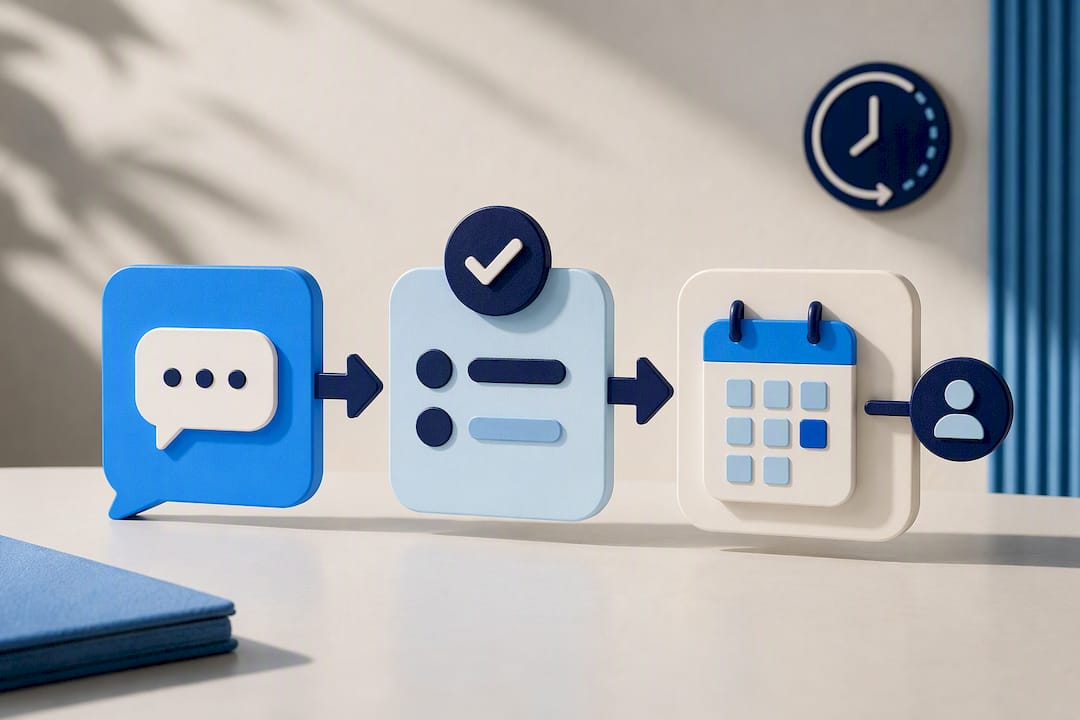
4. Chatbots and 24/7 capture. A chatbot on your website can answer FAQs, collect contact information, and even book appointments while you sleep. Setup requires a chatbot tool connected to your calendar or CRM. Chatbot lead capture tools can qualify and book leads around the clock, which matters since a large share of service inquiries happen outside business hours. In the first 30 days, install the widget and script basic qualifying questions. By day 90, refine the script based on which questions actually lead to booked jobs. Watch after-hours lead capture rate.
5. Referral program design. A structured referral program turns happy clients into a lead source. You need a simple incentive, a way to track who referred whom, and a short script your team can use to ask for referrals. Launch the ask process in the first 30 days. By day 90, formalize the incentive and start tracking referral-to-close rate. Watch number of referrals per month.
6. Review generation. Reviews build trust before a prospect ever calls. Automating review requests after every completed job removes the guesswork. Set up an automated request tool in the first 30 days. By day 90, respond to every review, positive or negative, since Google’s guidance shows active review management supports local visibility. Watch review count and average rating monthly.
7. Email nurture and reactivation. Not every lead books immediately. A nurture sequence keeps you top of mind, and a reactivation campaign can revive old leads who went quiet. Every email must comply with the CAN-SPAM Act, which requires identifying the message as an advertisement, including a valid postal address, and honoring opt-out requests within 10 business days. Build a three-email nurture sequence in the first 30 days. By day 90, add a reactivation campaign for leads older than 90 days. Watch open rate and reply rate.
8. Events, webinars, and partnerships. For higher-ticket or professional services, a webinar on a specific problem can generate dozens of qualified leads from one session. Partnerships with complementary businesses extend your reach without ad spend. Plan one event or partnership outreach push in the first 30 days. By day 90, run the event and follow up with every attendee within 48 hours. Watch attendee-to-consultation rate.
One in-house tip for the on-site work: businesses using search box optimization alongside these service pages often see stronger on-site conversion because visitors find what they need faster.
Outbound and paid channels remain primary pipeline drivers, but the gap between generating interest and converting it into sales-ready leads is where most businesses lose ground, according to the 2025 B2B pipeline generation benchmark data. Qualification, covered next, closes that gap.
Measuring and qualifying leads: simple scoring and must-track KPIs
A lead is not a customer, and treating every inquiry the same way wastes your follow-up time. Split leads into two buckets: a marketing qualified lead (MQL) has shown interest, maybe by filling out a form or downloading a guide, while a sales qualified lead (SQL) has the budget, timeline, and fit to actually book. The 2025 B2B Pipeline Generation Benchmark Report notes that many organizations struggle to convert MQLs into SQLs, which is exactly why a simple scoring system matters even for a small team.
Track four numbers no matter how small your operation is.
A simple scoring rubric works without any software. Score each lead on three factors: source quality (a referral scores higher than a cold social click), stated intent (someone who asked for pricing scores higher than someone who just asked a question), and budget or fit (does the job match what you actually offer and charge).
| Dashboard column | What it captures |
|—|—|
| Lead source | Where the lead originated |
| Intent signal | Action taken (call, form, chat) |
| Response time | Minutes or hours to first contact |
| Score | Combined source, intent, and fit rating |
| Outcome | Booked, lost, or still in progress |
Fast response time matters more than almost any other factor in this list, since a prospect who contacts three competitors usually books with whoever answers first.
Common mistakes, realistic costs, and timeline expectations
The most expensive mistake in lead generation is not spending on the wrong channel, it’s failing to follow up fast enough once a lead comes in. Second on the list: chasing every channel at once instead of mastering one. Third: ignoring your online reputation while pouring money into ads that send traffic to a business with no reviews.
Cost and timeline expectations follow the same bands from earlier: entry-level tactics take two to three months to show steady results, a scaled paid channel typically shows measurable lead flow within four to six weeks, and an accelerated multi-channel push shows the fastest growth but demands the most oversight.
A little market research goes a long way toward avoiding wasted spend. Professionals such as market research analysts specialize in studying customer preferences and forecasting which strategies will land, and their median pay reflects the value of that skill set when you’re deciding whether to hire in-house or outsource. Smaller shops sometimes contract with local firms like [The Best KC’s list of Kansas City market research firms] rather than build the skill internally.
90-day roadmap: weekly milestones to generate and qualify leads fast
A focused 90 days beats a scattered year. Here’s the sequence.
Pro Tip: Block 15 minutes every Friday to review your KPI dashboard. Small weekly checks catch problems before they become quarterly disasters.
By the end of week 12, you should know which channel produced your cheapest, fastest-closing leads, and that’s the one worth scaling first.
Author perspective: why service-business lead gen needs a different, pragmatic playbook
Most lead generation advice is written for companies with a marketing department and a six-month runway. Service businesses don’t have that luxury. You need leads this month, and you need to answer the phone before your competitor does.
The businesses that win aren’t the ones running the most channels, they’re the ones that pick one, follow up within minutes, and measure just enough to know what’s working. Complexity is not a strategy. A simple system, run consistently, beats a sophisticated one that nobody checks.
Focus first. Scale second. Measure the whole way through.
Frequently Asked Questions
How much do lead generation services cost?
Costs vary widely by channel and business size, ranging from low-cost organic tactics to paid campaigns that scale with budget. EngageZing’s Conversion Roadmap and 12-Month Growth Roadmap are available at no cost, giving you a baseline before committing spend elsewhere.
What is the biggest mistake in lead generation?
The most common and costly mistake is failing to follow up quickly once a lead comes in, since interest fades fast when nobody responds. A close second is spreading effort across too many channels instead of mastering one before scaling.
Which lead generation service is the best?
The best choice depends on your business type, sale value, and how fast you need results, so no single service fits everyone. EngageZing offers a free Conversion Roadmap that identifies which specific gaps, like listings, reviews, or website conversion, are costing you leads right now.
How much is the salary of a market research analyst?
Pay for market research analysts varies by experience and location, according to the U.S. Bureau of Labor Statistics. Smaller service businesses often outsource this work to local firms rather than hire a dedicated analyst.
Do I need to follow email marketing laws for lead nurture campaigns?
Yes, any commercial email you send must comply with the CAN-SPAM Act, which requires identifying the message as an ad, including a valid postal address, and honoring opt-out requests within 10 business days. This applies to B2B nurture emails as well as consumer marketing.
Share This Article
Found this useful? Send it to another owner who is still letting leads sit unanswered until they go cold.
Share on Facebook · Share on X · Share on LinkedIn · Share on Pinterest
Want More Information? Let’s Talk.
If you would rather not take this on yourself, we handle it for you. Our 4X Conversions service takes care of the setup and the ongoing work, then reports back so you can see exactly what changed. You keep running your business; we keep this moving.
Call us at 631-825-9464 or reach out here. No pressure, no obligation, and you can ask us anything — including whether this is even worth doing for a business your size.
Looking ahead, request your free roadmap analysis and we will map out a 12-month plan to close the conversion leaky bucket so more of the customers you already reach turn into booked work.
Written by Joe Leineke · Content on this blog is generated with AI assistance and independently reviewed and fact-checked by human marketing professionals for accuracy and quality.