The button is right there, and it takes about thirty seconds. Your post is doing well, the notification says so, and boosting it feels like the obvious next move. Then the boost ends, the report shows a few thousand people reached and a couple of dozen reactions, and the phone never rang. Most local business owners have lived this at least once, and many have concluded that Facebook ads do not work for a business like theirs. The conclusion is wrong. The format is.
A boosted post is not a campaign. It is a single post with a budget attached, and Facebook builds the cheapest possible audience around it: everyone within your radius who might engage with a post. Engagement is the goal you never chose. The people who tap a heart at a red light are rarely the people who will spend five hundred dollars on a kitchen remodel, a dental crown, or a semester of swim lessons.
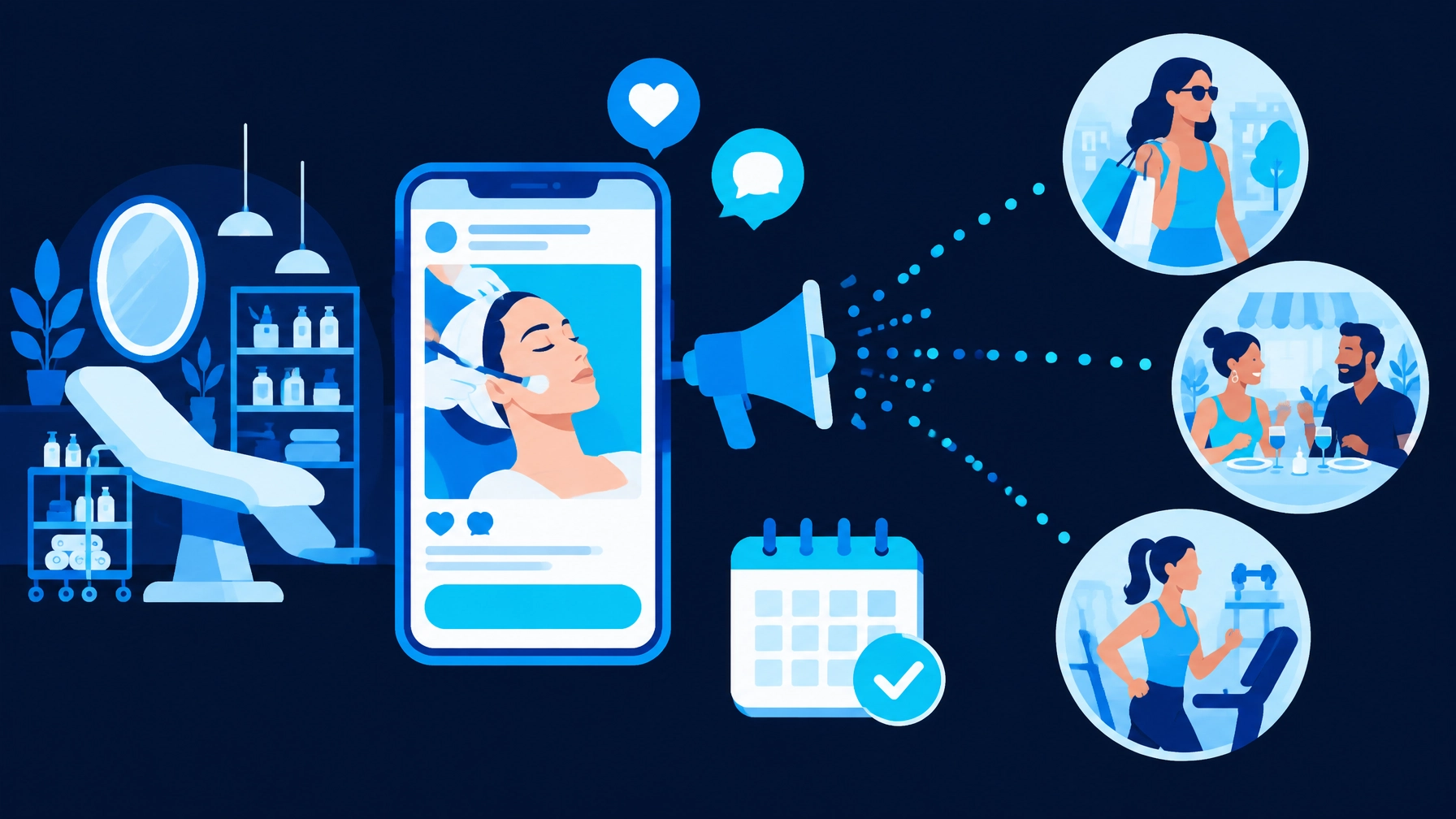
What a Boost Cannot Do That a Campaign Can
A real campaign starts with a different question: what should a person do, and what is that action worth to you? From there, everything a boost leaves out becomes available.
Choose the objective first. A campaign optimized for leads or messages is shown to people whose history says they fill out forms and send messages, not people who like photos. Same budget, different neighborhood of Facebook.
Layer intent into the targeting. A boost can target a zip code and an age range. A campaign can layer behaviors and interests on top of that radius: homeowners in the service area, engaged within the last year, in the market for a specific service. For a med spa or a restaurant, that difference is the entire difference between reach and revenue.
Follow up more than once. A boost shows your ad to people once or twice and stops. A campaign runs a sequence: the first ad introduces, the second shows proof, the third makes the offer with a deadline. Purchases rarely happen on the first exposure, and a boost only ever buys the first one.
Prove it in the numbers. A boost report ends at likes. A campaign with a conversion event tracks the form fill, the call, the booking, so you can see what a lead cost instead of guessing from reaction counts.
Where Local Businesses Actually Win on Facebook
The businesses that do well here are not the ones with the biggest budgets. They are the ones with an offer worth interrupting someone for.
A limited booking with a real deadline. A seasonal service priced for a specific month. A first-visit offer that removes the risk of trying you. These work because they give the scroll a reason to stop, and they give the sequence a third act: the ad with a countdown.
The ad creative itself matters more than the targeting, and it is the part owners skip. Local businesses have an unfair advantage here: real photos of your actual space, your actual team, your actual work beat polished stock imagery almost every time, because the ad that looks like the place you will walk into earns the trust the stock photo cannot. Two or three honest variations, tested against each other, will teach you more in two weeks than a month of boosting ever did.
And the ads need somewhere honest to land. If the ad promises a first-visit offer and the click arrives at a homepage with no mention of it, the money leaks at the last step. The campaign is one system: the ad, the follow-up, the page, and the person who answers when the phone rings.
The Budget Question, Answered Honestly
How much does this cost? Less than most owners fear, and the honest answer is that the test matters more than the number. A modest daily budget run as a proper campaign, with a real offer and conversion tracking, will outperform a large budget scattered across boosted posts every time. The mistake that costs local businesses the most is not spending too little. It is spending in a format that reports on applause instead of customers, drawing the wrong conclusion from the wrong numbers, and never coming back.
If you would rather have someone else read those numbers for you, that is precisely what a Facebook advertising agency exists to do. But the format lesson is free, and it holds whether you run the campaigns yourself or hand them off: stop boosting, start sequencing, and measure what a lead costs.
Frequently Asked Questions
Are boosted posts ever the right choice?
Rarely, and only when the goal is genuinely engagement, such as warming up a local audience before a campaign or getting eyes on a community event. If the goal is calls, forms, or bookings, a campaign built for that objective will beat the boost every time.
How much should a small local business spend on Facebook ads?
Enough to test one real offer against two or three ad variations for at least two weeks, then scale what works. The exact number matters less than running it as a proper campaign with conversion tracking, because that is how you learn what a lead actually costs.
What kind of offer works best for local businesses?
Something with a deadline and low risk: a limited booking window, a seasonal service, or a first-visit offer that removes the hesitation of trying a new place. The offer gives people a reason to act now instead of saving your ad for later.
How long before a Facebook campaign shows results?
Plan on two to three weeks of learning before the numbers mean anything, since the platform is still finding your buyers in the first stretch. Judge the campaign on cost per lead or per booking from week three onward, not on likes or reach.
Share This Article
Found this useful? Send it to another owner who is still measuring applause instead of customers from boosted posts.
Share on Facebook · Share on X · Share on LinkedIn · Share on Pinterest
Want More Information? Let’s Talk.
If you would rather not take this on yourself, we handle it for you. Our Facebook Advertising service takes care of the setup and the ongoing work, then reports back so you can see exactly what changed. You keep running your business; we keep this moving.
Call us at 631-825-9464 or reach out here. No pressure, no obligation, and you can ask us anything — including whether this is even worth doing for a business your size.
Looking ahead, request your roadmap analysis and we will map out a 12-month plan to close the conversion leaky bucket so more of the customers you already reach turn into booked work.
Written by Joe Leineke · Content on this blog is generated with AI assistance and independently reviewed and fact-checked by human marketing professionals for accuracy and quality.